Every Recording Begins with the Right Space.
Where Creativity Finds Its Sound.
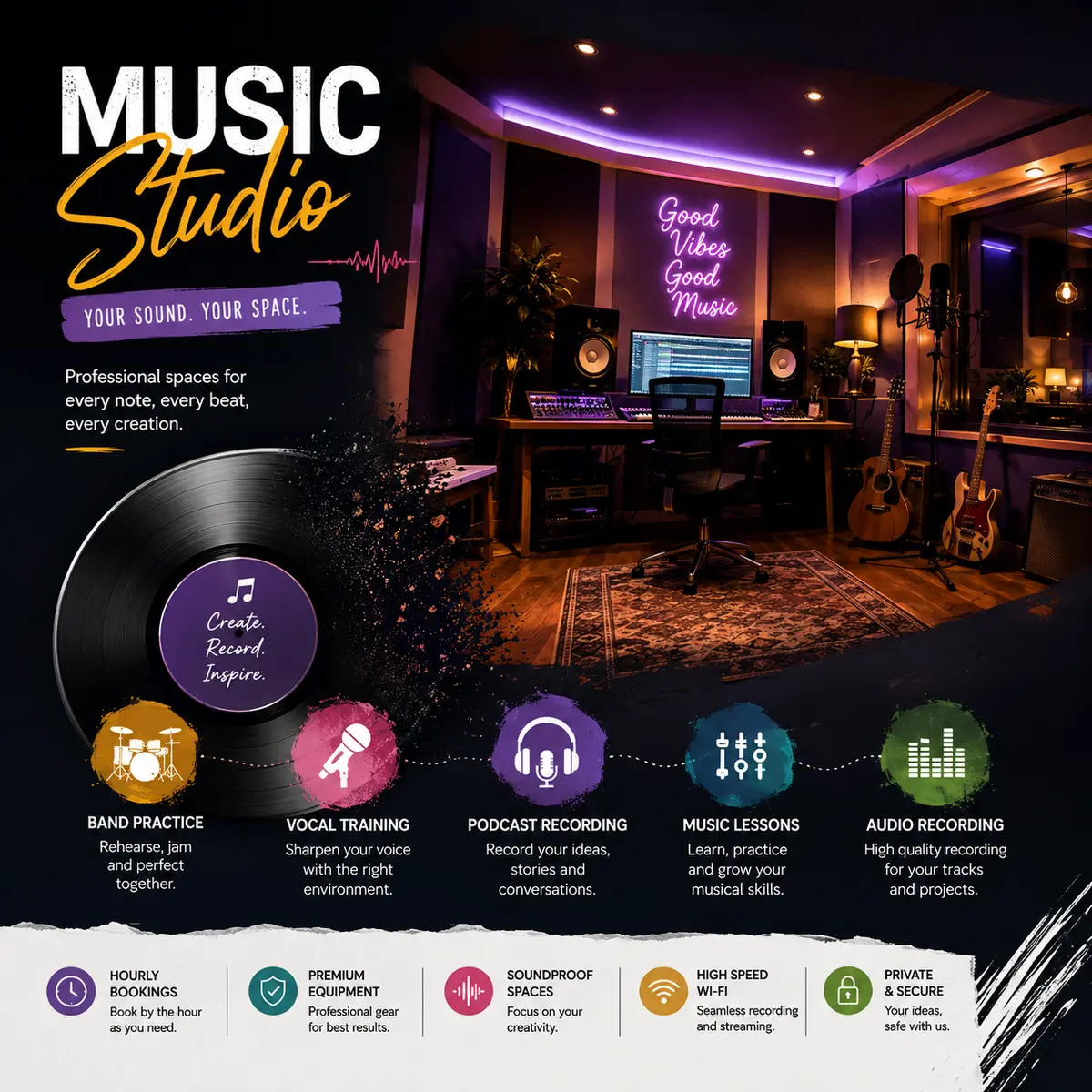
Rent professional music studios for recording, podcasting, rehearsals, vocal training, band practice, and content creation.
A properly treated recording room is expensive to build and almost impossible to replicate at home. Acoustic panelling, isolation, a clean signal chain and a quiet floor represent years of investment — and most studios still have empty hours in the diary every week.
Music studios built for every creator.
Why Music Studio Spaces Work So Well on XtraSpace
Studio owners understand better than anyone that studio time is perishable inventory. An hour that goes unbooked is gone permanently, while the loan on the equipment, the rent and the electricity all continue. Listing open hours publicly rather than relying only on word of mouth and repeat clients is the most direct way to raise utilisation on an asset that is already fully paid for.
The audience for studio time has expanded enormously beyond musicians. Podcasters need a quiet, acoustically controlled room and good microphones. YouTubers and content creators need clean audio far more than they need a fancy set. Voiceover artists need an isolated booth. Audiobook narrators need long, uninterrupted quiet sessions. Language and vocal coaches need a room where sound does not leak. Bands still need rehearsal space, but they are now a minority of total demand.
Rehearsal or jam rooms are worth listing separately from recording rooms. They need far less acoustic precision, cost much less to maintain, and serve a large and consistent audience of bands, college groups and solo practitioners who simply need somewhere loud is acceptable. Many studio owners find that a modestly equipped jam room booked five evenings a week earns more reliably than a premium recording room booked twice.
Guests care about specifics, and vague listings lose bookings. State the microphones, preamps, audio interface, monitors and DAW available. Say whether an engineer is included, available at extra cost, or not provided at all. Clarify whether the guest may bring their own instruments and equipment. Specify room dimensions and acoustic treatment. Musicians and producers make booking decisions on exactly these details.
What People Book Music Studio Spaces For
A single space rarely serves a single purpose. These are the bookings hosts see most often.
Music Recording Sessions
Independent artists track vocals and instruments in a properly treated room.
Podcast Recording
Podcasters get clean, controlled audio with professional microphones and isolation.
Band Rehearsals & Jamming
Bands practise in a room where volume is expected and backline is available.
Voiceover & Audiobook Work
Voice artists and narrators book isolated booths for long, uninterrupted sessions.
Vocal & Instrument Training
Coaches teach in a space where sound quality and isolation actually matter.
Content & Video Production
Creators record video content where audio quality is the deciding factor.
If You Own the Space
- Fill the empty hours in an expensive, fully paid-for facility
- Reach podcasters and creators, not just musicians
- List a simpler jam room alongside your premium recording space
- Offer engineering services as a paid add-on to increase booking value
- Approve each session so your equipment is only used by people you accept
If You Need the Space
- Record in acoustically treated rooms you could never build at home
- Access professional microphones, preamps and monitoring by the hour
- Hire an experienced engineer along with the room when you need one
- Book a rehearsal room without owning a full backline
- Pay only for the session hours you actually use
Music Studio Rental — Frequently Asked Questions
Is a sound engineer included in the booking?
It varies by listing. Some studios include an engineer in the hourly rate, some offer one as a paid add-on, and some rent the room only to guests who can operate it themselves. This significantly affects value, so confirm it before booking rather than assuming.
Can I bring my own instruments and equipment?
Most hosts allow it, and many expect it for guitars, basses and personal gear. Confirm what backline the studio provides — drums, amplifiers, keyboards — so you only carry what is genuinely needed. Also check load-in access and whether there is a lift.
Do I get the recorded files immediately after the session?
Usually yes, but agree the handover method in advance. Bring your own drive or arrange a cloud transfer. Also clarify how long the studio retains session files and whether any mixing or post-production is included or billed separately.
What is the difference between a recording studio and a jam room?
A recording studio has full acoustic treatment, isolation and a professional signal chain for capturing audio. A jam room is built for rehearsal — soundproofed enough that volume is not a problem, usually with a backline, but not intended for release-quality recording. Jam rooms cost considerably less per hour.
How long should I book for a recording session?
Most hosts set a two-hour minimum for recording, and in practice a productive vocal session usually needs three to four hours once setup and warm-up are accounted for. Podcast recordings are often shorter. Booking slightly more time than you expect to need is almost always the cheaper mistake.
Transform Every Square Foot into Opportunity.
One space. Endless possibilities. Join the hosts and creators already unlocking the true value of every room, hall and rooftop on XtraSpace.